
MIBT’s vision is to be the solution provider to replace wet works for structural developments in the built environment in Southern Africa, and to be the solution for green construction technology in the built environment.
1. The need to go green in every industry is now almost mandatory in developed countries.
2. Green technology attracts better funding rates and opportunities from funders and investors.
3. Industries are imposing punitive measures for failing to adopt green technology.
4. The amount of green washing taking place and a vital component of truly understanding what green technology is in the construction industry and understanding just what embodied energy is. This is the concept of calculating how much of energy is used to manufacture a particular product.
5. Sustainability in construction really is the dominant principle today and to really understand sustainability we must understand embodied energy.
6. Building with MiPanel is ideally suited for the ESG and Impact Investing environment.
Sustainable materials mean using materials that are locally sourced, recycled, or rapidly renewable products to reduce the environmental impact of material extraction and transportation.
Mi Panel is produced using minimal energy for the rotation of the mixers and no energy all in the curing process which is a pure exothermic reaction. This process takes just 48 hours from moulding to transport to site.
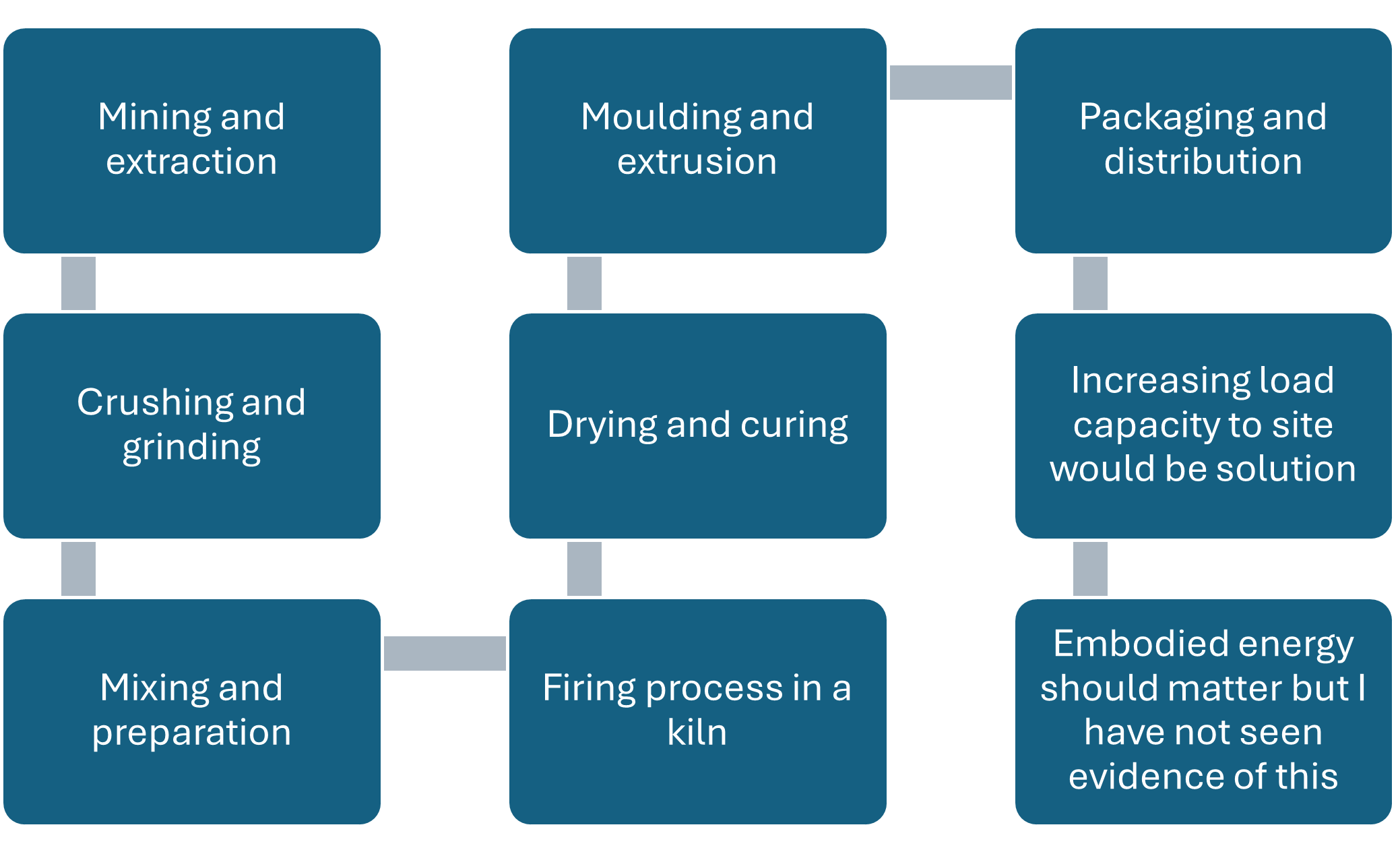
The entire process of clay brick manufacturing can take several days or even weeks, depending on the scale of production, the drying and firing methods used, and the specific requirements of the desired brick product. So, this begs the question the question, how green and sustainable is conventional construction? The term ‘green washing’ is a major concern in the ESG and impact investing space, it’s very real and has consequences.
To estimate the water usage for constructing an average 60 m² affordable house built with bricks and cement, we can consider the following:
1. Concrete Production - For a 60 m² house, the concrete required for foundations, floor slabs, and other structural elements can range from 20 to 30 cubic meters. Assuming a water requirement of 15-20% of the cement weight and a cement content of 300 kg/m³ of concrete, the water requirement for concrete can range from 3,000 to 6,000 liters.
2. Brick Production: For a 60 m² house with brick walls, the number of bricks required can range from 15,000 to 25,000 bricks. Assuming a water requirement of 1.5 to 2.5 liters per brick, the water required for brick production can range from 22,500 to 62,500 liters.
3. Mortar Production: For laying bricks and plastering, the mortar required can range from 5 to 10 cubic meters. Assuming a water requirement of 15-20% of the cement weight and a cement content of 300 kg/m³ of mortar, the water requirement for mortar can range from 750 to 2,000 litres.
4. Additional Water Usage: Water is also required for curing concrete and masonry work, cleaning construction equipment, and other miscellaneous purposes, which can add an additional 2,000 to 5,000 litres.
5. In total, the water usage for constructing a 60 m² house built with bricks and cement can range from approximately 28,250 to 75,500 litres. But let’s be conservative and just take it as being half of the lowest number of 28 000 litres. We are using 14 000 litres per house?
Please note that these are rough estimates, and the actual water usage can vary significantly based on the specific construction practices, local conditions, and efficiency measures employed.